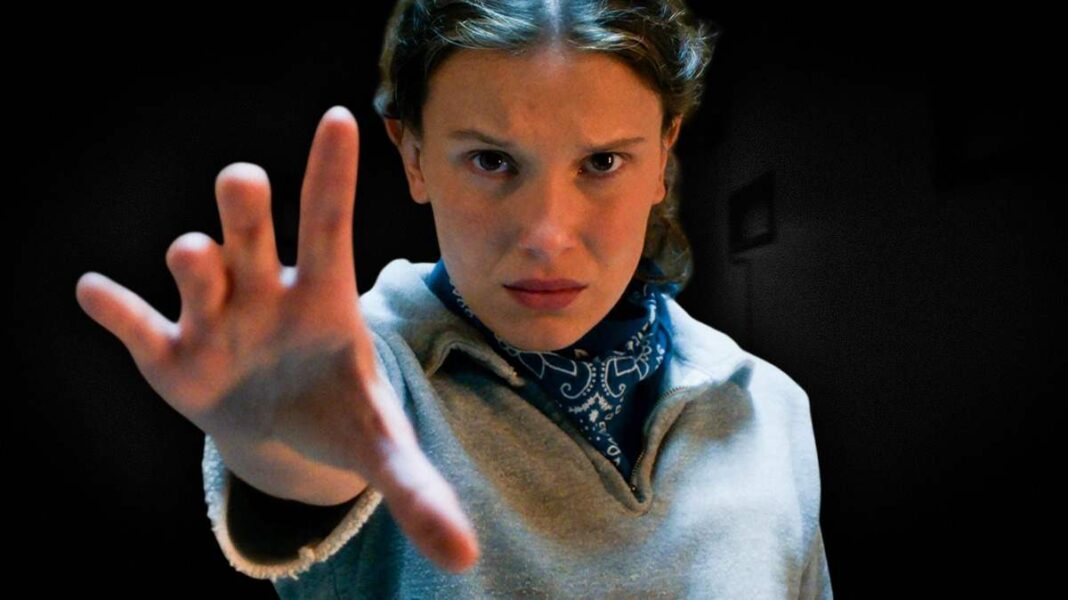
I’ve discovered the reason Eleven can’t sacrifice herself, and it has nothing to do with plot convenience—it has everything to do with what “Stranger Things” is actually about.
Kali’s theory doesn’t just apply to the children who were scientifically engineered. Nearly every kid in the group has suffered because of the circumstances of their birth or upbringing. Will and Jonathan endured Lonnie’s abuse, Lucas is constantly profiled because of his skin color, Dustin is bullied over a genetic dental condition, and even Holly grows up in a household marked by emotional distance. Pain caused by creation is not unique to Eleven. If the “normal” kids aren’t responding to their trauma with nihilism or a desire to erase themselves, then Eleven—who has already survived more than any of them—shouldn’t either. The show never argues that suffering disqualifies someone from living; it argues the opposite.
Eleven has also already learned that self-sacrifice through death isn’t love. When she discovers Hopper’s secret suicide mission, she’s devastated because she believes—correctly—that there is another way. That moment is crucial: it teaches her that isolating yourself and deciding to die “for others” doesn’t spare them pain, it multiplies it. From that point on, Eleven’s growth is about choosing connection and teamwork over martyrdom. Dying alone is something the show explicitly frames as a mistake, not a virtue.
At its core, “Stranger Things” is about healing trauma, not erasing it. The characters are who they are because of what they’ve endured together—the shared pain, the ways they’ve learned to communicate, and the trust they’ve built. Max and Holly don’t escape Vecna by avoiding fear; they have to move directly through it, navigating his mind maze and using the clues he leaves behind. Vecna doesn’t target children because they’re weak. Whatever is left of Henry understands that children are resilient. They’re capable of breaking patterns their parents are trapped in, and that resilience is exactly what threatens him.
The emotional scenes people complain about are not filler—they are the entire point. Steve survives because Dustin finally opens up to him before he falls. Max escapes Camazotz because Holly teaches her to run toward fear instead of away from it. Hopper overcomes his obsession with death by choosing to be as brave as his daughter Sarah. Jonathan and Nancy quite literally stabilize reality by choosing honesty, and Will sets himself free by coming out to the group, deciding that his truth matters enough to interrupt the chaos around them. Even with the world ending, the show insists that living authentically is worth it. That message would be meaningless if the ultimate solution were self-destruction.
Even Henry’s lessons to Eleven reject emotional suppression. He teaches her that her power comes from embracing the full spectrum of her emotions, not from numbing herself or shutting down. Her strength is rooted in feeling deeply—love, fear, anger, hope—all of it. A deliberate death would completely undermine the philosophy that gives her power in the first place.
And finally, there’s no way the Duffers reinforce all of these themes only to end the story with Eleven and Kali intentionally blowing themselves up. Kali has consistently been framed as unstable and manipulative, and she’s already violating Eleven’s autonomy by reading her mind in the void and fixating on Mike’s plan to find the waterfall. That’s not guidance—that’s interference. Kali represents the path Eleven didn’t choose. Eleven can’t die because “Stranger Things” is not about winning by disappearing. It’s about survival, healing, and choosing connection over despair. Letting Eleven live isn’t avoiding tragedy—it’s completing the story the show has been telling all along.