Wars become the frontrunner of any timeline. Where there is casualty, bloodshed, firing of bullets, and dropping of bombs, human lives are often reduced to nothing in history. But it is true that the people who fought in those wars, and more so, the people who did not fight in the wars, lived lives as complex and human as human beings from any given era or timeline. Don’t Let’s Go to the Dogs Tonight is a chronicle of such a fractured time in history, when a political war is waning in Rhodesia. Known as the Bush War period, the conflict took place between white settlers and indigenous people of Rhodesia (now Zimbabwe) over the land. The war concluded with an election, which decided the fate of the White people in Rhodesia, essentially driving them away from the land as the Communists won the election. While this is the political, nameless, historical premise, the human stories that exist within them cannot be examined in terms of just black and white.
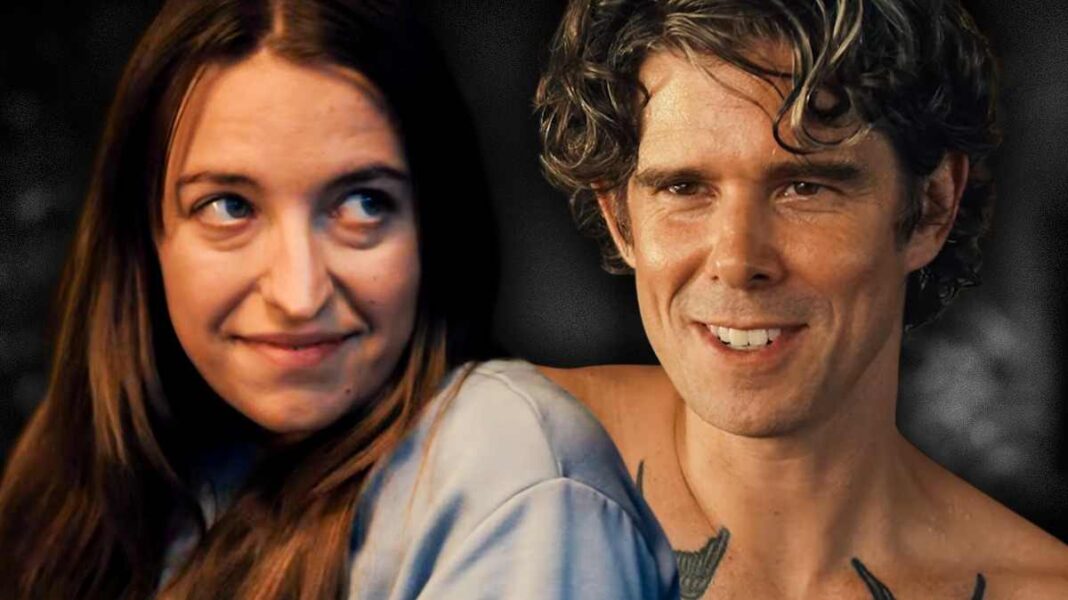
The film is an adaptation of Alexandra Fuller’s memoir of the same name, which came out in 2001 and became a bestseller. Alexandra, or Bobo, the child narrator, recounts her days of growing up on a farm in Rhodesia as the country goes into election. Her days are long, leisurely, and filled with childhood boredom and wonder, while there is a rising sense of anxiety in the household regarding the end of the white rule. Nicola (played by the director of the film, Embeth Davidz) is mother to Bobo and Van, who feels fraught with the anxiety of losing the farm. Tim, the father, is away for long stretches, the Brightlight (a faction of the failed army) guards the household. There are also Sarah and Jacob—indigenous people of the land who look after the farm. The film loosely follows a narrative but is more of a long glance at a lost childhood shaped by the reality of a war that is happening out of sight but is very real. Let’s take a look at how Bobo’s childhood unfolds in the film.
Spoilers Ahead
How Does the War Affect Bobo?
Like all wars, this one is about ownership too; the Zimbabwean Civil War took place from 1964 to 1979 in the then-state of Rhodesia, which was a temporary British colony at that time. Bobo’s family is one of the white settlers who bought a farm and is living a slow life there. Her mother, Nicola, is a policeman, and her father fights in the military against the African “terrorists.” Bobo, an unruly kid in ratty clothes and with a dirty face, rides her bike across the land with a BB gun slung over her shoulder and thinks she is an African too. Unlike her elders and her sister Van, who keeps to herself, Bobo goes everywhere, and is friends with the indigenous people. There is Sarah, an African housekeeper who looks after her, and she is close with. There is Jacob, who looks at her with the ambivalence of loving a child and hating the white masters. Bobo is bossy—she likes to order other kids around, even the elders—an imitation of the elders that she sees around her. Not only does she imitate them, but she also talks like them and smokes cigarettes.
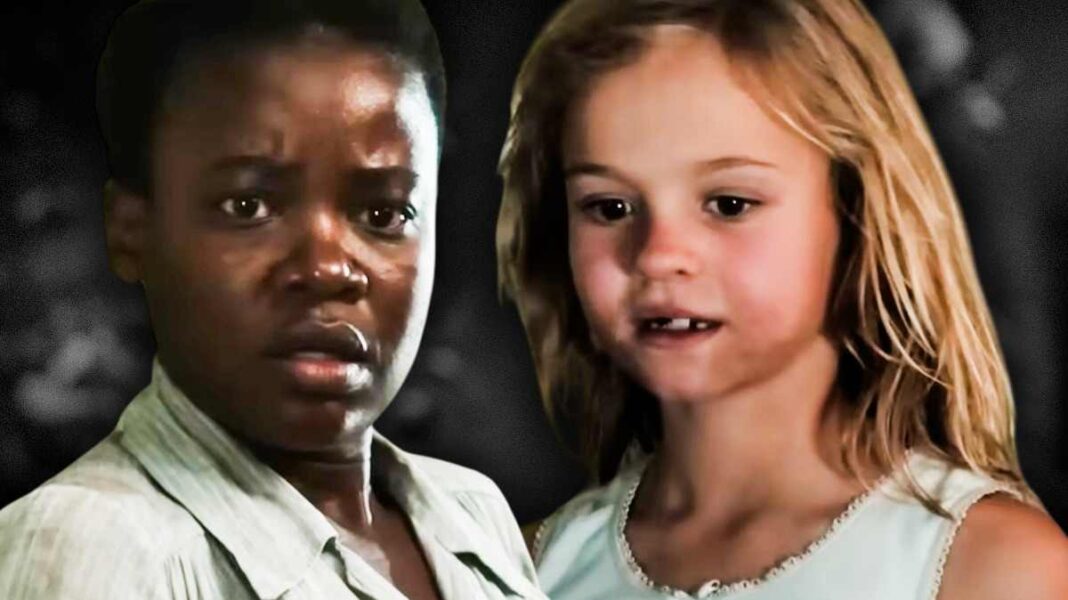
While little kids are afraid of ghosts and monsters in the dark, Bobo is afraid of the “terrorists.” This is also a term that she coined from her mother, who thinks all the Black people are essentially terrorists. Bobo’s mother has forbidden her to enter the room at night because she may be mistaken for a terrorist and can be shot. Bobo roams around in the farm listening to ancestral stories of the land from Sarah and feels more connected to her ancestral roots than she feels to her own. While we see nothing of the war on screen (just like The Zone of Interest), the film revolves around what Bobo sees and feels and, in turn, how thousands of children, no matter which side of the war they are on, go through the war. Bobo’s direct narration gives us a look at the reality of the war without diplomacy or pretense—as she asks her mother whether they are “racists” or if she is African. When her mother answers that she is not an African, Bobo is quick to ask if it is because of her skin color. Her mother comments that it is more complicated than that—and that is as much explanation as we get about the political scenario. While representation of a time of political duress depends on facts, events, and information, this is a new form of storytelling that focuses on the inner sanctum of a child.
Why is Sarah attacked?
In the long-winded narrative of the film about the daily lives of the Fullers, there are certain and sudden spikes. One day, there is an attack on Sarah, whom the family finds lying bloody on the ground. When Sarah is away for treatment, Bobo prays every day by the ancestral tree, rooting herself deeper in the stories that she heard from Sarah, to bring her back. Sarah is the one who is closest to her on the entire farm. Her mother is always anxious about losing the land, and her sister Vanessa is an absent, distant sister. Without Sarah, Bobo’s days lose shape and life. Thankfully, her prayers work, and Sarah returns home alive. Bobo goes to visit Sarah and asks her to come along when they are going away from the farm. By this time, the election results have come out, declaring a win for the indigenous people. This implies that Sarah and other Britishers need to leave the land. Bobo does not know factions or skin color; what she knows is love and kinship. She desperately wants Sarah to accompany them, but one of the family members tells her that Sarah was attacked because of Bobo. She adds that people must have gotten offended seeing Sarah hang out with Bobo all the time and attempted to shoot her. She also adds that Sarah belongs with the family and not with people who would leave her like a shot animal. Now, Bobo understands nothing; all she understands is the weight of getting blamed for a thing she did not do and a soon-to-be-arriving separation from a friend that she dearly loved. The reality of the war once again divides people tragically, marring any trace of affection that can exist in this unequal friendship between two ordinary human beings far away from the war.
Why Did Nicola Try to Kill Herself?
Once the election results come out, Nicola is not a recognized part of the land. Yes, from a post-colonial lens, she is the settler in an indigenous land. But the film goes beyond those identities, showing that all humans alike form a bond with the land they live in almost instinctually. For a mother, the kinship becomes more intricate. Nicola mentions that she has buried her dead children in this land (Bobo mentions losing her sister Olivia, and we briefly see a photo.) Separating from the land for Nicola means separating from her child and perhaps also from the soil that holds her cries and pain? Nicola spirals into manic episodes after she hears that her husband has sold off the land and the farm. She screams that they have fought all their lives for the farm—which is personally legitimate and politically incorrect—a strange sense of ambivalence that runs in the film all through.
Later at night, Bobo finds her mother drowning in the bathtub. She does not die and later tells Bobo that she merely fell asleep in the bathtub. But Bobo does not believe it. No matter how much violence is filtered, it still reaches the child’s eyes.
Does Sarah leave with Bobo?
Sarah and Bobo is a strange friendship made up of bathtime, endless summer afternoons, and stories. Sarah tells Bobo the story of Mwari and how she was offended when humans started to exploit the earth. However, Mwari forgave the humans in the end and said that their bones can remain in the earth while their soul—the god’s breath—shall go into heaven after death. Sarah does not accompany Bobo on her journey, but her story does. Their separation from each other becomes one of separating the body and the soul. While Sarah, the bones, remains in the earth, Bobo, the soul, wanders away to a distant land; or maybe vice versa. Bobo recounts this story as they drop off Sarah in the middle of the road and leave the farm. Bobo wishes that Sarah would turn around one last time—a gesture that Bobo equates with love, and Sarah does not. Bobo closes her eyes slowly and sees Sarah as a Zimbabwean goddess. Days will pass after this, months and even years. Bobo’s memories of the farm will fade, but the one singular memory that she will have of her childhood at Rhodesia is probably going to be the last, imagined glimpse of Sarah that she caught where she looked like Mwari, the goddess, blending in with her story. Narratives and people are hardly inseparable, and Sarah’s story will represent Rhodesia, her childhood, and a kinship undefinable by the war to Bobo forever.
Don’t Let’s Go to the Dogs Tonight ends in a palpable sadness. The rightful owner of the land wins, Jacob salutes Bobo as she leaves, and justice is restored. Yet, the film compels us to turn our gaze into something that lies beyond the complexities of borders and ownership, a kinship that is formed in the hearts.